

It’s a vital component of a company’s financial statements, allowing for more informed decisions. This net sales ratio provides a tangible metric for stakeholders to measure and compare the business’s ability to honor its debt obligations over time. Next, locate the total interest expense on the income statement, which represents the cost of borrowing.

The Times Interest Earned Ratio Equals EBIT Divided by: Unveiling the Secret to Financial Stability
- While the TIE ratio can vary widely among industries and sectors, it directly reflects a company’s financial leverage and capacity for managing debt in relation to its earnings.
- The times interest earned ratio (TIE) compares the operating income (EBIT) of a company relative to the amount of interest expense due on its debt obligations.
- Adopting these strategies can fortify a company’s TIE ratio, underlining its ability to leverage finances and ensure consistent revenue.
- This indicates that Harry’s is managing its creditworthiness well, as it is continually able to increase its profitability without taking on additional debt.
- The times interest earned (TIE) ratio tells you how easily a company can pay the interest on its debt using its earnings.
Understanding a company’s financial health is crucial for investors, creditors, and management. One important metric that provides insight into a firm’s ability to meet its debt obligations is the Times Interest Earned (TIE) ratio. This ratio measures how effectively a company can cover its interest expenses using its operating income. The Times Interest Earned (TIE) ratio assesses a company’s ability to meet its debt obligations. To calculate this ratio, start by identifying the company’s earnings before interest and taxes (EBIT), which is typically listed as operating income on the income statement. The Times Interest Earned (TIE) ratio measures a company’s ability to meet its debt obligations on a periodic basis.
What does it mean when the times interest earned ratio is less than 1.0 for a company?
The times interest earned ratio measures a company’s ability to make interest payments on all debt obligations. The times interest earned formula is EBIT (company’s earnings before interest and taxes) divided by total interest expense on debt. Debts may include notes payable, lines of credit, and interest obligations on bonds. The Times Interest Earned Ratio, a crucial metric in financial analysis, is a litmus test for a company’s ability to meet its interest obligations. This ratio is a clear indicator of financial stability, providing stakeholders with insights into a company’s capacity to service its debt. In this article, we will delve into the intricacies of the Times Interest Earned Ratio, exploring its calculation, significance, and implications for businesses.
GROWTH STAGE EXPERTISE
The Times Interest Earned Ratio (TIER) compares a company’s income to its interest payments. In other words, it helps answer the question of whether the company generates enough cash to pay off its debt obligations. One important way to measure a firm’s financial health is by calculating its Times Interest Earned Ratio. Investors use this metric when a company has a high debt burden to analyze whether a company can meet its debt obligations.

Companies that can generate consistent earnings, such as many utility companies, may carry more debt on the balance sheet. Lenders are interested in the number of times a business can increase earnings without taking on more debt, and this situation improves the TIE ratio. If a company raises capital using debt, management must determine if the business can generate sufficient earnings to make all interest payments on debt. Interest expense represents the amount of money a company pays in interest Sales Forecasting on its outstanding debt.
Reduce interest expenses
Create and enforce a formal collection process to avoid incurring bad debt expenses, which decrease earnings. Review all of the costs you incur, and identify areas where costs can be reduced. If you can purchase a product through multiple suppliers, you can force the suppliers to compete for your business and offer lower prices. Further, indicators like the TIER, P/E, or P/B are generally used to compare similar companies to one another, rather than the times interest earned ratio equals ebit divided by evaluate the intrinsic value of a standalone firm.
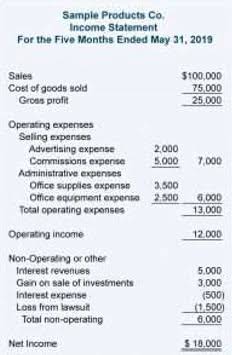
If you are analyzing a given company, it can be useful to compare its indicators to its peers. Therefore, the firm would be required to reduce the loan amount and raise funds internally as the Bank will not accept the Times Interest Earned Ratio. You are required to compute Times Interest Earned Ratio post new 100% debt borrowing. We shall add sales and other income and deduct everything else except for interest expenses.